Kikuyu, Kiambu County · Registered CBO 0013654

Economic justice for households living with disability, not just for them.

KBFC/PLWDs is a caregiver-led advocacy and economic-inclusion platform. We organise the families and caregivers who carry the daily, often invisible, cost of disability care — and we push for the income, skills, and policy voice that fairness demands.

21caregiver households organised under KBFC/PLWDs
2024community idea founded, formally registered March 2025
5disability categories represented: physical, mental, visual, hearing & epilepsy
1shared goal: dignity through income, not handouts
Who We Are

A registered, caregiver-led community organisation — not a charity case file.

Kikuyu Blessed and Favoured Caregivers for Persons with Disability (KBFC/PLWDs) began as an informal idea among caregivers on 29 June 2024 and was formally registered as a Community Based Organisation on 21 March 2025 under Kenya's Community Groups Registration Act, No. 30 of 2022.

We bring together caregivers of persons living with physical, mental, visual, and hearing disabilities, and epilepsy, in Karai, Kikuyu Sub-County, Kiambu County. Most of our members are women and family caregivers who have had to step out of paid work to provide round-the-clock care — and who have, until now, had no organised platform to be seen, heard, or financially supported.

We exist because disability is a household issue, not only an individual one. When a caregiver has no income, the whole household — including the person living with a disability — carries that cost in lost schooling, lost healthcare, and lost dignity.

Certificate of Registration for Community Groups Serial No. CBO 0013654 · Registration No. DSD/22/120/02/79652 · Issued 23 March 2025 by the Directorate of Social Development, Kikuyu Sub-County, Kiambu County
01

Caregiver dignity

We organise the people who give care, recognising their unpaid labour as economic work that deserves investment.

02

Disability inclusion

Every initiative is designed so that persons with disability themselves benefit directly — in income, mobility, and visibility.

03

Policy fairness

We connect local lived experience to county, national, regional, and continental disability policy so decisions are made with us, not for us.

We work alongside, and have received recognition from, the National Council for Persons with Disabilities (NCPWD), and partner with faith and community institutions such as the Daughters of Charity – Thigio, who support members' households directly, including in education for children living with disability.

How We Work

From training to trade: a caregiver economic empowerment model.

Organise & represent

We bring caregivers together under one accountable structure — with a chairperson, secretary, treasurer, and trustee — so members have a single, recognised voice with government, donors, and partners.

GovernanceMonthly meetingsBanked & audited funds

Build skills

Members receive training in business and financial management, self-presentation and social skills, and the technical skills of whichever livelihood project is underway — so income, once earned, is also sustained.

Business & marketingAnimal husbandrySelf-management

Seed livelihoods

We channel seed capital, in-kind grants, and revolving funds into shared, member-run economic projects — currently a pig-rearing enterprise — designed to scale and to be shared across members' plots.

Pig rearing projectRevolving loan fundsShared land & pens

Advocate & connect

We document our model and our members' experience to inform county and national disability policy, and to link with regional and continental disability-rights movements pursuing the same economic justice agenda.

Evidence-based advocacyCross-movement partnershipPolicy engagement
Flagship Project

Pig-rearing for economic empowerment

Our current proposal trains members in business, social, and animal-husbandry skills, then establishes a shared pig pen on a member's plot, near Nairobi's ready pork market. Proceeds are ploughed back to expand the herd, build new pens on other members' land, and grow members' savings — so seed capital becomes a self-sustaining household income stream rather than a one-off handout.

Already, the National Council for Persons with Disabilities has previously extended a KES 100,000 revolving loan fund grant to caregiver organisations in Kikuyu Constituency under its Economic Empowerment programme — proof that this model works when backed.

KES 763,000full project budget — training, pen construction, piglets, feed, transport & facilitation
6 monthswork plan from training through first sales
20members trained directly across business, social, and pig-rearing skills
Our Policy Foundation

We ground our advocacy in the law already on the books — and push for its full realisation.

Across Kenya, East Africa, the continent, and the UN system, governments have already committed to disability-inclusive economic justice. Our work is to turn those commitments into income, access, and policymaking power for caregiver households.

Kenya — National

Constitution of Kenya, Article 54

Guarantees persons with disability the right to dignity, to reasonable access, and to use sign language, Braille, and other communication formats — the constitutional basis for our access and inclusion demands.

Kenya — National

The Persons with Disabilities Act

Establishes the National Council for Persons with Disabilities (NCPWD), mandates economic empowerment, employment, and social protection measures — the legal hook for the grants and revolving funds we pursue.

Kenya — County

Community Groups Registration Act, No. 30 of 2022

The framework under which KBFC/PLWDs is formally registered, giving caregiver-led groups like ours legal standing to receive funds, sign agreements, and be counted in county planning.

East African Community

EAC Persons with Disabilities Protocol & Policy

Commits Partner States to harmonised, disability-inclusive social and economic policy across East Africa — a basis for regional learning and cross-border advocacy alliances.

African Union

Protocol on the Rights of Persons with Disabilities in Africa

To the African Charter on Human and Peoples' Rights — affirms the right to work, social protection, and participation in decision-making, and Africa's Agenda 2063 commitment to leave no one behind.

United Nations

UN CRPD & the Sustainable Development Goals

The Convention on the Rights of Persons with Disabilities (Articles 27–28 on work and adequate living standards) and the SDG pledge to leave no one behind anchor our call for economic inclusion, not charity.

Our Team

Led by caregivers, for caregivers.

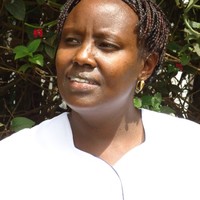
Catherine Gitonga, Secretary, KBFC/PLWDs
Secretary

Catherine Gitonga

Catherine coordinates KBFC/PLWDs' day-to-day administration, documentation, and partner relationships — keeping the organisation's records, proposals, and reporting in order so that trust with donors, government, and members is never in question.

Chairperson
Augustine Kamaru
Vice Chairlady
Mary Wanjuhi
Vice Secretary
Mary Wambui Mungai
Treasurer
Susan Njeri
Trustee
Serah Nyaguthii
Member
Beatrice Nyathira
Member
Grace Waweru
Member
Grace Ngugi
Member
Teresiah Mumbi
Member
Ruth Wanjuhi
Member
Monica Wanjiku
Member
Margaret Wanjiku
Member
Joyce Njeri
Member
Joseph Ngure
Member
Hannah Wangari
Member
Elizabeth Njoki
Member
Ann Wanjiku Wanjiru
Member
Elizabeth Gitungo
Member
Grace Kimani
Member
Shosho wa Agata
21 caregivers strong and growing. Every member represents a household caring for someone living with disability — together they govern KBFC/PLWDs through monthly meetings, shared bank accountability, and a constitution that requires three signatories for any withdrawal.
Get In Touch

Open to partnerships — government, donors, and disability movements alike.

@

Email

kbfc-plwd@kilimora.africa

Location

Karai, Kikuyu Sub-County, Kiambu County, Kenya

§

Registration

CBO Serial No. 0013654 · DSD/22/120/02/79652

We welcome

Co-funding for livelihood projects, technical training partners, disability-rights coalitions, and policy researchers.

Send us a message

Whether you're a government office, a fellow OPD, a funder, or simply someone who wants to stand with caregiver households — we'd love to hear from you.